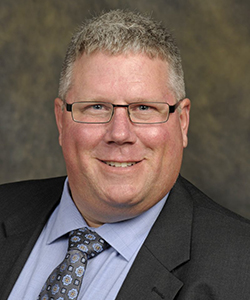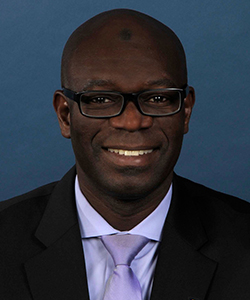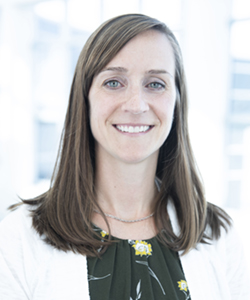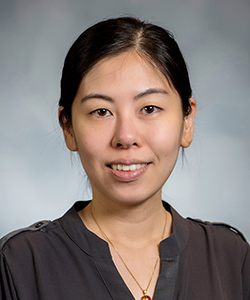
Initiative Leads
Dr. Naim Kapucu and Dr. Gurt Ge
The Urban Resilience Initiative (URI) is an interdisciplinary collaborative effort designed to examine the stresses and strains placed upon urban environments to determine best practices and processes to strengthen community resilience, specifically in Central Florida. Developed in fall 2019, URI is co-led by Dr. Naim Kapucu and Dr. Gurt Ge, faculty members in the School of Public Administration at the University of Central Florida. Based in the College of Community Innovation and Education, the School of Public Administration supports and educates students and professionals dedicated to careers in public service.
The goal of the initiative is to create a network of coalitions and collaborations among academic researchers, community partners and stakeholders that strengthen community resilience in Central Florida. URI aims to be a reference of community-and-partnership-driven urban resilience for other urban regions across the world, helping to strengthen the capacity of cities in anticipating and managing risks induced by natural and human-made disasters. We are a research network and enterprise that brings together community partners and academic researchers from social science, science, and engineering.
cities dealing with the effects of climate change
(United Nations High Commissioner of Refugees, 2018)
world’s population projected to be urban by 2050
(United Nations, 2018)
economic losses annually caused by disasters
(World Bank, 2020)
A definition of urban resilience can provide insights and understanding into complex ideas surrounding sustainability and vulnerability, and is increasingly being used to understand highly complex, dynamic social systems like urban areas. It is important as urban areas today are facing a range of shocks and stresses from both natural and man-made hazards. From rapid population growth, to climate change, to political instability and public health issues, cities are facing amplified challenges that are unlike any they have managed before.
1962 - Thalidomide scandal
1963 - Nuclear Test Ban Treaty
1963 - Vajont reservoir disaster
1967 - Greenpeace is founded
1968 - Paul Erlich: "The Population Bomb"
1969 - UNESCO conference "Man and his Environment
1969 - US National Environmental Policy Act
1970 - US Environmental Protection Agency
1972 - J.S. Sawyer warns about global warning in Nature paper
1972 - Club of Rome: Limits to Growth
1973 - C.S. Holling: Resilience and Stability of Ecological Systems
1975 - Banqiao Reservoir (China) collapse
1978 - Love Canal Homeowners Association
1984 - Bhopal disaster
1985 - Joe Farman: Ozone hole discovery
1986 - Chernobyl nuclear disaster
1987 - Montreal Protocol
1987 - "Our Common Future" (The Brundtland Report)
1990 - First IPCC Assessment Report
1992 - Rio de Janeiro; Earth Summit on Sustainable Development; Local Agenda 21
1995 - Kobe Earthquake
1997 - Kyoto; COP 3
1998 - Aarhus Convention on Access to Information; Public Participation and Access to Justice in Environmental Matters
2001 - 9/11 attacks
2002 - Johannesburg; Rio+10.
2003 - European heatwave
2004 - United Cities and Local Governments
2005 - Hurricane Katrina
2006 - Al Gore: "An Inconvenient Truth"
2006 - The Stern Review
2009 - Copenhagen; COP15
2011 - Japan Tsunami and Fukishima nuclear disaster
2012 - Hurricane Sandy
2013 - 100 Resilient Cities
2012 - Paris; COP21.
2015 - Sustainable Development Goals; 2030 Agenda
2019 - COVID-19 Pandemic

Components of Urban Resilience
Dimensions
- Financial or Economic
- Natural or Environmental
- Infrastructural
- Human and Cultural
- Social
- Institutional or Governance
Sectors
- Public
- Nonprofit
- Communication
- Community
- Academic
- Business
Urban Resilience Advanced Graduate Seminar
Drs. Ge and Martin lead an urban resilience advanced graduate seminar (PAD 6357: Urban Resilience) within the School of Public Administration. It examines a wide range of issues associated with understanding urban resilience from community, environment, infrastructure, security, to planning, and assessment aspects. Specific topics include urban resilience and resilient communities, urban resilience, urban vulnerability, disaster resilience, resilience policy and practice, adaptive planning and hazard mitigation, urban resilience assessment, climate change adaptation, infrastructure interdependency and security, disaster recovery and housing recovery, and interdisciplinary research in urban resilience.
Research and Projects
Research Focus
URI explores the challenges experienced by urban environments due to the stresses and strains placed upon it, specifically in Central Florida. It aims to expand its national and international connections to seek potential collaborations and increase its sphere of influence.
Publications
[Move URI White Paper to STARs]
Current Projects
Some members of the initiative have been awarded with a multiyear NSF-funded project to leverage existing community partnerships and resources and evaluate the state-of-the-art Information Technology (IT) applications in data generation, collection, analysis and integration applied to community resilience to natural disasters at a regional level. The team will investigate the partnerships among public, private and nonprofit sector entities through the big data applications in these contexts and multiple stakeholder groups will be studied, including government officials, business operators, and nonprofits managers, particularly how they collaborate and communicate as a group to make timely and effective decisions to strengthen community resilience to natural disasters. The project builds on the expertise of an interdisciplinary team with synergistic contributions of emergency management, urban and regional planning, public administration, geographic information science (GIS), computer science, civil engineering, and operations management.
Responding to recent events, URI has also initiated dialogs and discussions to work with funding agencies and community partners to begin research projects and apply to competitive funding in high-impact challenges that urban areas across the world currently face such as the impact of COVID-19 and the health international crises in the touristic sector and the management of large influxes of environmental migrants.
URI Events
URI holds monthly meetings and various workgroup sessions to bring together leaders in urban resilience to share ideas, collaborate, and conduct research. URI has also participated in the 15th annual Public Administration Research Conference hosted by the Center for Public and Non-Profit Management at UCF.
Research Collaboration Meetings
Date and time to be announced
via Zoom
If you would like to attend this meeting, please contact us.
URI Workgroups
- Environmental Migration Workgroup
- COVID-19 Synthesis Workgroup
- Urban Tourism Resilience Workgroup.
Leading Scholar Lecture Series
Details TBD
URI Faculty
[NEED TO GET UPDATED LIST OF FACULTY - below are the profiles for those already in our directory]