
Through her commitment to understanding how innovation and technology can transform the criminal justice system, Jill Viglione is earning national recognition for her work.
Viglione, an associate professor in the College of Community Innovation and Education’s Department of Criminal Justice, recently received the 2025 Marguerite Q. Warren and Ted B. Palmer Differential Intervention Award from the American Society of Criminology (ASC)’s Division on Corrections and Sentencing.
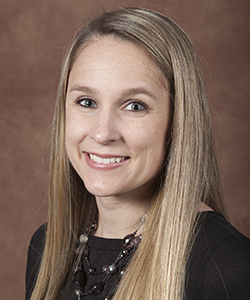
Jill Viglione
The ASC is an international organization dedicated to the pursuit of scholarly, scientific and professional knowledge concerning crime and delinquency. Its Division on Corrections and Sentencing facilitates and encourages research related to sentencing, rehabilitation, punishment and corrections. Within this division, the Marguerite Q. Warren and Ted B. Palmer Differential Intervention Award honors scholars and practitioners who have led differential interventions — solutions based in a personalized approach instead of a “one-size-fits-all” philosophy — to improve well-being and long-term reform among juvenile and adult offenders in the United States.
Viglione says she is especially honored to receive this award as it’s the same one previously received by her mentor.
“It’s really nice to be recognized by my peers who are engaged in interesting work,” Viglione says. “One of my greatest mentors, Faye Taxman, was honored with the same award in 2013. Her guidance and example profoundly shaped my academic journey, and to follow in her footsteps makes this even more meaningful.”
One of Viglione’s primary research areas is organizational change — how organizations and people innovate, what the process looks like, and whether people resist or embrace that change. She says the COVID-19 pandemic sparked her interest in how organizations and people both navigate and adapt to emerging technological change.
“When COVID hit, I saw that agencies who already had the infrastructure for technology adapted and adjusted to change much easier than those who didn’t,” she says. “After the pandemic, I started to wonder what we could do with technology to help improve procedures and practices. By speaking with different practitioners in the field, I was able to help come up with some interventions to evaluate.”
Viglione serves as a principal investigator in several technology-based intervention projects funded by the United States Department of Justice. These projects — developed at correctional agencies in Texas and Maine — focus on building a mobile application to let probation and parole officers virtually meet with their clients. Viglione says this intervention has already made a sizeable difference in the efficiency of the supervision process.
“Clients would normally have to drive to the office monthly or sometimes even weekly to meet with their officers,” Viglione says. “Through the app, clients were able to video call their officers and meet with them virtually. This allowed them to not have to miss work, pay for childcare or an Uber, or sit in a waiting room for an hour just to talk to their officers for 10 minutes.”
In another project being developed in Florida, Viglione is also providing research for a mobile application that identifies potential problem areas in a person’s life that can influence recidivism — such as substance use, employment or housing — and connects them with reliable, recommended community resources to address issues.
“There are many resources that aren’t credible, but people will go to them anyway,” Viglione says. “We’re going to take out that guesswork and give people the connections to quality resources. Officers will be able to check in through the app and see if their clients viewed these resources and contacted them. This is really going to help meet people where they are on an individual basis.”
In an increasingly digital society, Viglione says she believes technology is instrumental to the future of criminal justice for professionals and clientele alike.
“This field is complex, and we need good people in it,” Viglione says. “Many agencies have struggled with hiring people who want to be in the profession, but I’ve spoken with probation and parole staff who say policies on technology and remote work helped make the job more appealing. A lot of people really appreciated those changes and felt they were more effective in their jobs. On the client side, technology is one of the ways we can reduce the pains of supervision. Our goal should be to help people succeed and ultimately not be in the system.”