
If you ask Tashana Howse '13PhD and Shane Wiggan ’24EdD what fuels their passion for teaching mathematics, they’ll tell you it’s helping every student believe they can be a mathematician — and empowering mathematics educators to support them in the process.
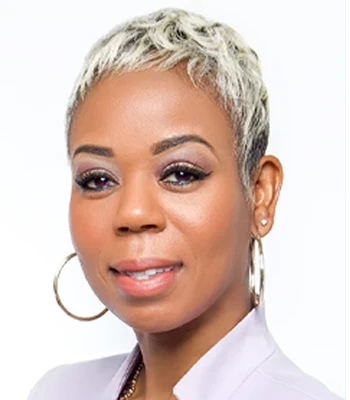 Tashana Howse
It’s something they’ll soon be doing at the national level as directors-at-large on the National Council of Teachers of Mathematics (NCTM) Board of Directors. NCTM is the world’s largest professional mathematics education organization dedicated to improving PreK-12 math instruction and optimizing successful student outcomes. Their three-year term begins following NCTM’s annual meeting in October, when they’ll step into helping shape the organization’s direction, policies and activities.
Howse, who earned her doctorate in mathematics education, is a professor of mathematics education at Georgia Gwinnett College, where she teaches preservice teachers and supervises elementary and secondary education interns. Wiggan, a Noyce Fellow who graduated with a doctorate in curriculum and instruction with a specialization in K-8 mathematics education, spent 10 years as a middle school mathematics teacher and recently became assistant director of math success at Impact Florida. Both have been actively involved with NCTM at the state and national levels.
“Being able to serve on the board and support NCTM's mission of advancing and advocating for the teaching and learning of mathematics in K-12 schools is an honor,” Howse says. "It’s affirming that your peers see that you've made an impact in the field, and that they want you to continue helping change the future of math education.”
For Howse, being elected to the board is a full-circle moment. Now entering her 27th year in education, she recalls her initial introduction to NCTM as an undergraduate mathematics education student at Florida State University. Later, during her time at UCF, she would attend and present at the annual NCTM conference for the first time.
“It ignited a fire for me in my own teaching of mathematics,” Howse says. “A lot of things that I've been able to do through NCTM is a result of my doctoral program at UCF and our professors ensuring that we had access to the experiences and resources NCTM offers.”
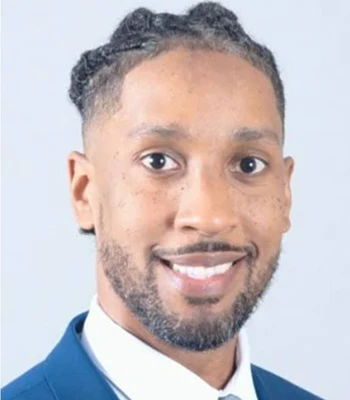 Shane Wiggan
Wiggan credits the National Science Foundation Noyce Fellow program and his professors at UCF with helping launch his experience with NCTM.
“Our cohort already had a solid foundation of teaching mathematics entering the Noyce program, but our introduction to NCTM opened our eyes to the bigger issues facing math education nationally,” Wiggan says. “It’s a great place to collaborate with other educators and to gain insight about things that are happening outside of your classroom and around the country. I'm excited to now be able to lend my voice and perspective on the board of an organization that tunes into systemic issues affecting mathematics education.”
Sparking Momentum in Mathematics Education
Having been inspired in a mathematics classroom herself, Howse credits her high school geometry teacher with sparking her passion for mathematics education by making it relatable — using hands-on experiences to bridge concepts with students’ lived experiences. It was so impactful that she returned to her high school to work alongside that very teacher for the first two years of her career.
“She connected mathematics to our lives, to our community,” she says. “We were able to discover geometry by doing things, building, constructing, going outside, observing the environment.”
As she went on to teach college-level mathematics, Howse noticed a pattern: Many of her students struggled with the subject and didn’t have good experiences with it. It would later become an area of focus in her research.
“My whole focus has been on how we get students motivated and engaged in mathematics class,” she says. “We want them to feel like they belong in this space, and that they're empowered and inspired through mathematics.”
It’s the same mindset that has motivated Wiggan since he first became a teacher and realized the extent of a generally negative connotation with the subject area.
"Some students — even a lot of adults that I meet — don't see themselves as mathematics people, and they think it's this thing that you are either born with it or you aren’t,” he says. “I want to positively affect how students feel about math and make sure they know they’re mathematicians. Like many things in life, mathematics can be difficult, but it's very doable when you’re equipped with the right strategies for teaching and learning it.”
Sarah Bush, professor of K-12 STEM education in UCF’s School of Teacher Education, has had a front-row seat to watching both Howse and Wiggan grow as mathematics educators and leaders.
“As a faculty member and a doctoral program coordinator, watching two of our alumni be elected to the National Council of Teachers of Mathematics Board of Directors at the same time is an incredibly proud and meaningful moment,” she says. “Their election reflects the talent, dedication and vision both have demonstrated throughout their careers. It also speaks to UCF's longstanding commitment to preparing leaders who make a national impact — and further establishes UCF as one of the nation's premier institutions for developing leaders in mathematics and STEM education.”